
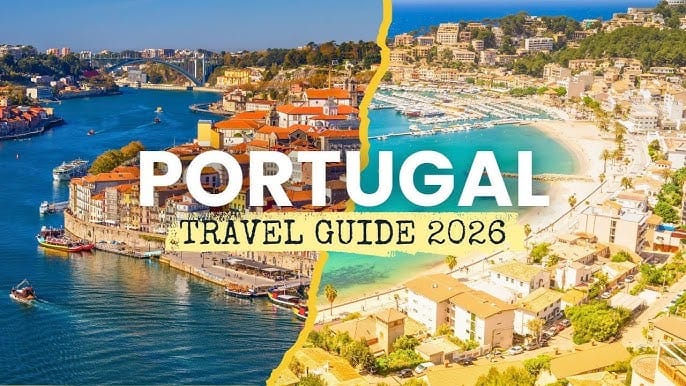
Portugal has quietly become one of Europe’s most-loved summer destinations, and it’s easy to see why. You get walkable, tile-covered cities, some of the best surf and swimming beaches on the continent, food that punches way above its price point, and a slower pace than you’d find in Paris or Rome. Here’s everything you need to plan the trip.
Getting There and Getting In
Most travelers fly into Lisbon Humberto Delgado Airport (LIS), Portugal’s main international gateway, with direct routes from major North American cities including New York, Boston, Miami, and Washington D.C. on TAP Air Portugal, plus strong connections across Europe. Porto’s Francisco Sá Carneiro Airport (OPO) is the second-biggest hub and a good alternative if you’re focusing your trip on the north.
Getting around
Trains connect Lisbon, Porto, and Coimbra quickly and comfortably. For the Algarve coast, the Douro Valley, or Alentejo’s back roads, renting a car gives you far more freedom — distances are short and driving is easy.
Where to Go
Lisbon
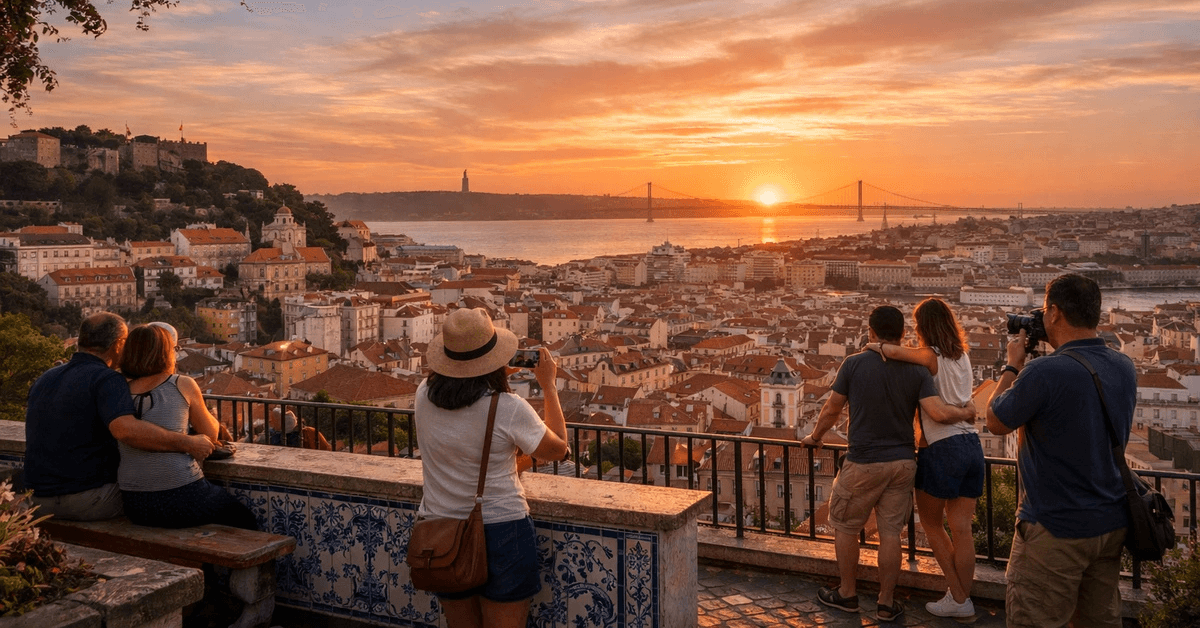
The capital is built on seven hills overlooking the Tagus River, so be ready for some climbing (or just hop on the iconic yellow Tram 28). Wander the narrow lanes of Alfama, the oldest neighborhood, where fado music drifts out of tiny restaurants at night. Belém is where you’ll find the Jerónimos Monastery and the Belém Tower, both UNESCO World Heritage Sites, plus the original custard tart bakery. For sunset, head to a miradouro (viewpoint) like Senhora do Monte or Portas do Sol.
Porto
Smaller, moodier, and river-facing, Porto is built on port wine and riverside charm. Cross the Dom Luís I Bridge for the best skyline view, take a boat tour along the Douro River, and tour one of the port wine cellars (caves) in Vila Nova de Gaia across the water. The Livraria Lello bookshop and São Bento train station, with its hand-painted azulejo tiles, are worth the crowds.
The Algarve
Portugal’s southern coast is the country’s beach headquarters — dramatic ochre cliffs, sea caves, and calm turquoise water. Base yourself in Lagos, Albufeira, or the quieter Tavira further east.
Sintra
A short train ride from Lisbon, Sintra feels like a fairy tale — misty hills dotted with pastel-colored palaces, most famously the Pena Palace, plus the Moorish Castle and the mysterious Quinta da Regaleira with its underground initiation well.
Douro Valley
Terraced vineyards climbing steep hillsides along the river, best explored by car, train, or a slow river cruise from Porto. This is where port wine is made, and the scenery alone is worth the trip.
The Azores (if you have extra time)
Nine volcanic islands in the middle of the Atlantic, a world away from mainland Portugal. Crater lakes, hot springs, whale watching, and hiking trails through green pastures — a completely different side of the country.

Best Beaches for Swimming
Portugal’s beaches vary a lot by region — the Algarve is warmer and calmer, while the west coast (near Lisbon and Porto) tends to have colder water and bigger waves, better for surfers than swimmers.
- Praia da Marinha (Algarve) — regularly ranked among Europe’s most beautiful beaches, with limestone cliffs, arches, and clear water good for swimming and snorkeling.
- Praia da Falésia (Albufeira, Algarve) — a long stretch of red-orange cliffs meeting golden sand, with gentle, swimmable water.

- Praia de Benagil (Algarve) — home to the famous Benagil sea cave, reachable by kayak, paddleboard, or boat tour.
- Ilha Deserta (near Faro, Algarve) — a boat-only barrier island beach, wild and much less crowded.
- Praia do Camilo (Lagos, Algarve) — a small cove reached by a wooden staircase, sheltered and calm.

- Praia da Comporta (near Lisbon) — laid-back, dune-backed, and increasingly fashionable, with warmer water than the beaches directly around Lisbon.
- Praia de São Rafael (Albufeira) — smaller cove beach with clear water, good for a quieter swim.
If you want surf rather than calm swimming, look to Ericeira or Peniche north of Lisbon, and Nazaré if you want to (safely) watch some of the biggest waves in the world.
What to See and Do
- Watch the sunset from a miradouro in Lisbon, ideally with a glass of vinho verde in hand.
- Take a day trip to Sintra and budget the full day — the palaces are spread out and queues build fast.
- Ride Tram 28 through Lisbon’s hilliest, most historic neighborhoods.
- Tour a port wine cellar in Vila Nova de Gaia, across the river from Porto.
- Kayak or boat to Benagil Cave in the Algarve for one of Portugal’s most photographed sights.
- Walk the Roman ruins and hilltop villages of the Alentejo, especially Évora and Marvão, for a quieter, slower-paced Portugal.
- Catch a fado performance in Alfama or Mouraria — Portugal’s traditional, melancholic musical style, best experienced live in a small, dimly lit tasca.
What to Eat & Drink
Portuguese food centers on excellent seafood, simple preparation, good bread, and even better pastries.
- Pastéis de nata — the custard tarts, best fresh and warm with a dusting of cinnamon. The original recipe comes from Belém.
- Bacalhau (salt cod) — Portugal is said to have a different bacalhau recipe for every day of the year; try it grilled, baked with potatoes (bacalhau à Brás), or in fritters (pastéis de bacalhau).
- Grilled sardines (sardinhas assadas) — a summer staple, especially during Lisbon’s June festivals, served simply with bread and grilled peppers.
- Francesinha — Porto’s over-the-top sandwich, layered with meats, covered in melted cheese and a spiced tomato-beer sauce.
- Caldo verde — a simple, comforting kale and potato soup with slices of chouriço.
- Percebes (goose barnacles) — a strange-looking but prized Atlantic coast delicacy, briny and worth trying once.
- Ginjinha — a sour cherry liqueur, often served in a small chocolate cup from tiny hole-in-the-wall bars in Lisbon.
- Vinho verde — a young, slightly fizzy white wine from northern Portugal, perfect for hot weather.
- Port wine — sweet and fortified, best sampled at its source in Porto’s wine cellars.
A Few Practical Notes
Portugal remains one of the most affordable countries in Western Europe — outside Lisbon, a good meal often runs €8–15, and a glass of wine is a few euros. Summer (June through August) is peak season and can get hot inland, especially in the Alentejo and Douro, while coastal areas stay milder thanks to the Atlantic. If you can, book accommodation in the Algarve and Lisbon well ahead, since summer is high season and prices climb accordingly.
Have a great trip — boa viagem!
Stay Connected and be the first to know about Best Deals & Discounts for places around the globe!!